
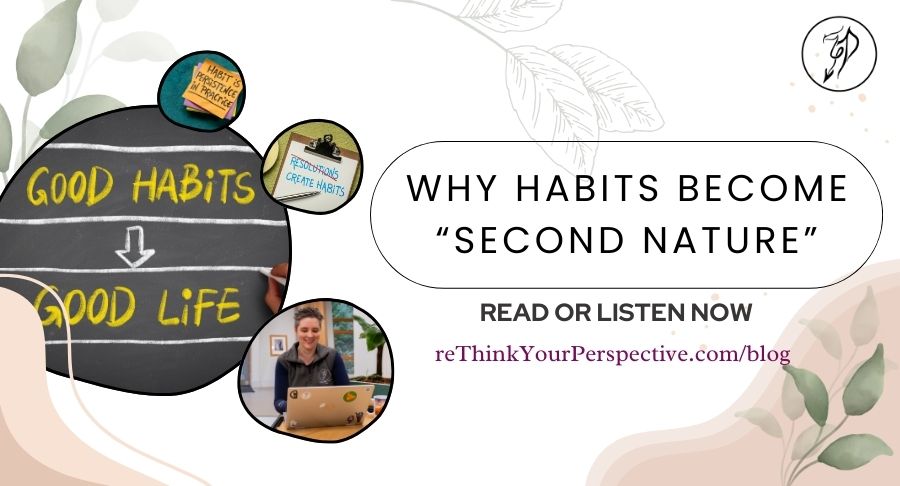
Welcome to reThink Your Perspective’s blog. Your trusted space for unlocking potential, empowering mindsets, building productive habits, and boosting motivation. Today we are discovering why habits become second nature, how repetition, identity, and environment shape behaviour, and how to design habits that support productivity.
Prefer to listen instead? You can access this blog as a podcast HERE. Don’t forget to join our mailing list for weekly updates and powerful tools to support your growth.
Why Some Habits Feel Effortless (and Others Don’t)
Have you ever noticed how some behaviours happen almost automatically, while others require constant effort?
You don’t usually have to motivate yourself to brush your teeth, lock the door, or check your phone. These actions feel natural, almost unconscious. We often describe them as “second nature”.
This phrase is more than a figure of speech. It points to something important about how habits work, and why they are so powerful for productivity.
When habits become second nature, they reduce mental effort. They stop relying on motivation or willpower and instead run quietly in the background. This is why habits play such a crucial role in sustainable productivity.
Understanding why habits become second nature gives you the ability to design habits that support your goals, rather than fight against them.
What Does “Second Nature” Actually Mean?
When we say a habit has become second nature, we mean it feels automatic. It happens with little conscious thought or emotional resistance.
This doesn’t mean the behaviour requires no effort at all. It means your brain no longer treats it as a decision.
Instead of asking:
- “Should I do this?”
- “Do I feel like doing this today?”
- “Where do I start?”
The behaviour simply happens.
From a productivity perspective, this is incredibly valuable. Every decision you don’t have to make saves mental energy. Over time, this reduction in mental load makes work feel calmer and more manageable.
Why Habits Become Second Nature
Habits become second nature through a combination of repetition, identity, and environment. When these elements work together, behaviours move from effortful to automatic.
Let’s look at each one.
The Role of Repetition in Habit Formation
Repetition is the most obvious part of habit formation, but it’s often misunderstood.
Repeating a behaviour helps your brain recognise a pattern. Over time, the brain becomes more efficient at running that pattern, using less conscious effort.
However, repetition doesn’t mean doing something perfectly or intensely. It simply means doing it consistently enough for the brain to learn.
This is why small habits are often more successful than big ones. A habit that feels manageable is easier to repeat, and repetition is what leads to automation.
From a productivity point of view, repetition:
- Reduces the energy needed to start tasks
- Builds momentum through familiarity
- Makes follow-through feel more natural
The goal is not to force repetition, but to make repetition easy.
How Identity Shapes Habits
One of the most overlooked aspects of habit formation is identity.
Over time, habits influence how we see ourselves:
- “I’m someone who plans my day.”
- “I’m someone who finishes what I start.”
- “I’m someone who works best with structure.”
When a habit aligns with identity, it feels less like something you have to do and more like something that reflects who you are.
This identity link strengthens habits because the brain prefers consistency between behaviour and self-image. Actions that fit identity feel easier to repeat.
For productivity, this matters because:
- Habits tied to identity require less motivation
- Resistance reduces over time
- Behaviour becomes self-reinforcing
Instead of asking, “How do I force myself to be productive?”, the question becomes, “What would someone who values calm, consistent productivity do next?”
Why Environment Is More Powerful Than Willpower
Environment plays a huge role in whether habits become second nature.
Your surroundings constantly send signals to your brain about what to do next. These signals are called cues, and they are often stronger than conscious intentions.
For example:
- A cluttered workspace can trigger distraction
- A visible notebook can prompt planning
- A consistent work location can cue focus
When the environment supports a habit, the brain doesn’t need to rely on willpower. The habit feels easier because the cue is already present.
This is why changing environment is often more effective than trying to change behaviour directly.
In terms of productivity, supportive environments:
- Reduce friction
- Lower decision fatigue
- Make helpful habits easier to repeat
As an aside, an amazing book to help with understanding habits further and creating supportive, productive habits is ATOMIC HABITS by James Clear. I highly recommend it!
How “Second Nature” Habits Reduce Mental Load
Mental load refers to the amount of cognitive effort required to manage tasks, decisions, and responsibilities.
When everything requires conscious thought, mental load builds quickly. This leads to fatigue, overwhelm, and procrastination.
Habits that have become second nature reduce mental load by:
- Removing repeated decisions
- Creating predictable structure
- Freeing attention for meaningful work
Instead of spending energy deciding how to work, you can focus on what matters most.
This is one of the main reasons habits and productivity are so closely linked. Productivity improves not because you try harder, but because you think less about starting.
Designing Habits That Support Productivity
Habits don’t become second nature by accident. They can be designed intentionally.
Here are some practical ways to do that.
Start Smaller Than You Think Necessary
Habits become automatic through repetition, not intensity. Starting small makes repetition more likely.
For example:
- Five minutes of planning instead of thirty
- One focused task instead of a full to-do list
Small habits reduce resistance and increase consistency.
Attach Habits to Existing Routines
Linking a new habit to something you already do creates a natural cue.
Examples include:
- Reviewing priorities after making your first drink of the day
- Writing a to-do list immediately after opening your laptop
This reduces reliance on memory and motivation.
Shape Your Environment to Support the Habit
Make the habit easier by adjusting what’s around you:
- Keep tools visible
- Reduce distractions
- Create dedicated spaces for specific tasks
Environment does much of the work for you when habits are designed well.
Focus on Identity, Not Perfection
Rather than aiming for flawless execution, focus on what the habit represents.
Ask:
- “What kind of person does this habit support?”
- “What identity am I reinforcing by doing this today?”
This shift makes habits more meaningful and easier to maintain.
Why Productivity Improves When Habits Feel Natural
When habits feel like second nature, productivity stops being a daily struggle.
Instead of:
- Forcing yourself to start
- Negotiating with your energy
- Relying on motivation
Your routines quietly carry you forward.
This doesn’t mean every day is easy. It means the baseline level of effort is lower. Productivity feels steadier, calmer, and more sustainable.
Over time, this consistency compounds into meaningful progress.
Common Misconceptions About “Second Nature” Habits
It’s worth clearing up a few myths here as well…
- Habits don’t become second nature overnight
- Automation doesn’t mean zero effort
- Missing a day doesn’t undo progress
Second nature habits develop gradually. They grow stronger through repetition, alignment, and support. Not pressure.
What Do You Think?
Habits become second nature when repetition, identity, and environment work together.
When this happens, productivity improves not because you push harder, but because your habits quietly support you.
You don’t need dramatic change to see results. You need habits that feel natural enough to repeat.
A gentle question to reflect on:
Which habit could you design to feel more like second nature, and less like a daily battle?
That shift often marks the beginning of calmer, more sustainable productivity.
If this inspired you to reThink your own habits, explore my other posts in the Knowledge Centre, or to learn more about how I can help you apply these principles in your own life. You can:
- Message me here
- Connect on social media
- Or book a free discovery call
To your continued success,
Jaiye