

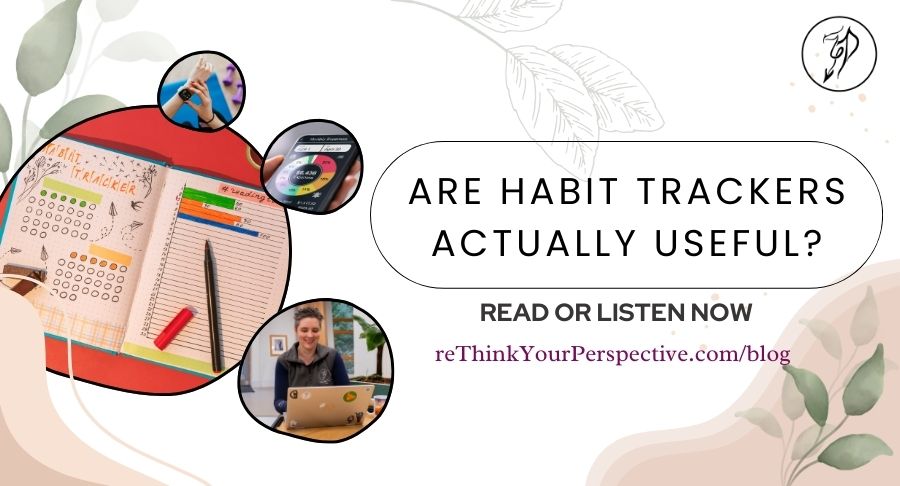
Welcome to reThink Your Perspective’s blog. Your trusted space for unlocking potential, empowering mindsets, building productive habits, and boosting motivation. Today we are looking at whether habit trackers are useful or counterproductive. Exploring the pros, cons, and smarter ways to build consistent habits without tracking overload.
Prefer to listen instead? You can access this blog as a podcast HERE. Don’t forget to join our mailing list for weekly updates and powerful tools to support your growth.
Do Habit Trackers Help? Or Add Pressure?
Habit trackers are everywhere.
From beautifully designed paper journals to apps with streak counters and reminders, tracking habits has become a popular way to build consistency and improve productivity.
But are habit trackers useful? Or do they sometimes create more pressure than progress?
The answer, as with most productivity tools, is: it depends.
Habit trackers can be powerful when used intentionally. But they can also become another source of stress if misunderstood or misused.
Let’s explore both sides.
What Habit Trackers Are Designed to Do
At their core, habit trackers are simple.
They allow you to record whether you completed a habit on a given day. This might be:
- Ticking a box
- Marking a calendar
- Logging progress in an app
- Maintaining a visible streak
The purpose of habit tracking is to make behaviour visible.
When you see your progress, it reinforces consistency. Visual cues can motivate you to continue and reduce the chance of forgetting.
From a psychological perspective, tracking works because:
- It creates accountability
- It provides feedback
- It makes progress tangible
For some people, this visibility is incredibly helpful.
The Benefits of Habit Trackers
Used well, habit trackers can support habits and productivity in meaningful ways.
1. They Increase Awareness
Tracking highlights patterns.
You may notice:
- When you’re most consistent
- When habits slip
- How energy levels affect behaviour
This awareness allows for adjustment rather than guesswork.
2. They Reinforce Momentum
Seeing a visible streak can feel rewarding. It creates a sense of progress and achievement.
Momentum matters in habit-building. A tracker can make small wins visible, which helps sustain effort in the early stages.
3. They Reduce Mental Load
Instead of wondering, “Have I done this today?”, you can check.
This reduces decision fatigue and keeps habits from slipping simply because you forgot.
4. They Work Well for Data-Oriented People
Some individuals are naturally motivated by measurement and structure.
For these people, habit trackers:
- Provide clarity
- Increase accountability
- Strengthen commitment
For the right personality type, tracking feels supportive rather than stressful.
When Habit Trackers Become Counterproductive
Despite the benefits, habit trackers are not universally helpful.
In some cases, they can undermine consistency.
1. They Encourage Perfectionism
Streaks can become emotionally loaded.
When a streak breaks:
- It can feel like failure
- Motivation can drop sharply
- People may abandon the habit entirely
This all-or-nothing response turns tracking into pressure rather than support.
2. They Shift Focus to the Tracker, Not the Habit
Sometimes the goal subtly becomes “keeping the streak alive” rather than building meaningful behaviour.
This can lead to:
- Rushing habits just to tick the box
- Performing the bare minimum
- Prioritising completion over quality
The tracker becomes the focus instead of the purpose behind the habit.
3. They Add Cognitive Overload
For already overwhelmed individuals, adding another tool can feel heavy.
If someone is juggling work, family, and responsibilities, tracking multiple habits daily may:
- Increase mental load
- Create unnecessary complexity
- Feel like another task to manage
In these situations, habit tracking can undermine productivity rather than support it.
4. They Don’t Fix Poorly Designed Habits
A tracker cannot rescue a habit that is:
- Too big
- Poorly timed
- Unclear
- Unrealistic
If the habit design is flawed, tracking simply highlights inconsistency without solving the root issue.
Who Habit Trackers Work Best For
Habit trackers tend to work well for people who:
- Enjoy structure and measurable progress
- Are motivated by visual feedback
- Are building one or two focused habits
- Have realistic expectations
They are particularly helpful in the early stages of habit formation, when repetition needs reinforcement.
However, they are less helpful for individuals who:
- Struggle with perfectionism
- Feel overwhelmed easily
- View broken streaks as failure
- Prefer intuitive routines
Understanding your own tendencies is key.
How to Use Habit Trackers Without Pressure
If you choose to use a habit tracker, a few adjustments can prevent it becoming counterproductive.
Focus on Patterns, Not Streaks
Instead of obsessing over consecutive days, look at overall consistency.
Ask:
- Am I showing up most days?
- Is this becoming easier over time?
This reduces the emotional weight of a missed day.
Track Fewer Habits
Trying to track everything increases complexity.
Start with one or two meaningful habits. Let them stabilise before adding more.
Redefine Success
Success is not perfection.
Success is returning after disruption.
If a streak breaks, continue without drama. The habit matters more than the record.
Alternatives to Habit Tracking
If habit trackers feel heavy or stressful, consistency can still be built without them.
Here are alternative approaches.
Use Environmental Cues
Design your environment to prompt behaviour naturally.
For example:
- Keep a notebook visible for planning
- Place a book on your pillow as a reading cue
- Use a consistent workspace for focused tasks
When cues are clear, tracking becomes less necessary.
Build Habit Stacking Into Routines
Attach new habits to existing ones.
For example:
- Review priorities after making your morning drink
- Stretch after brushing your teeth
This builds automaticity without requiring daily recording.
Reflect Weekly Instead of Daily
Rather than tracking daily, reflect once a week.
Ask:
- What worked?
- What slipped?
- What needs adjusting?
This maintains awareness without daily pressure.
Focus on Identity
Instead of tracking behaviour obsessively, reinforce identity.
Ask:
- What kind of person am I becoming through this habit?
Identity-based habits often feel more sustainable than streak-based ones.
Habits, Productivity, and Simplicity
The purpose of habits is to reduce mental load, not increase it.
If a habit tracker supports consistency and reduces friction, it can be useful.
If it increases pressure or perfectionism, it may need adjusting, or removing entirely.
Productivity improves when habits feel natural and manageable, not when they become another task to manage.
What Do You Think?
Are habit trackers useful?
For some people, absolutely.
For others, they can create unnecessary pressure.
The key is intention.
Habit trackers are tools. And tools only work when they support the person using them.
A gentle question to reflect on:
Does tracking your habits make consistency easier, or heavier?
The answer will guide you better than any productivity trend.
If this inspired you to reThink your own habits, explore my other posts in the Knowledge Centre, or to learn more about how I can help you apply these principles in your own life. You can:
- Message me here
- Connect on social media
- Or book a free discovery call
To your continued success,
Jaiye